Channel Affinity
Communicate to customers at the right place (Email, SMS, Push, Whatsapp)
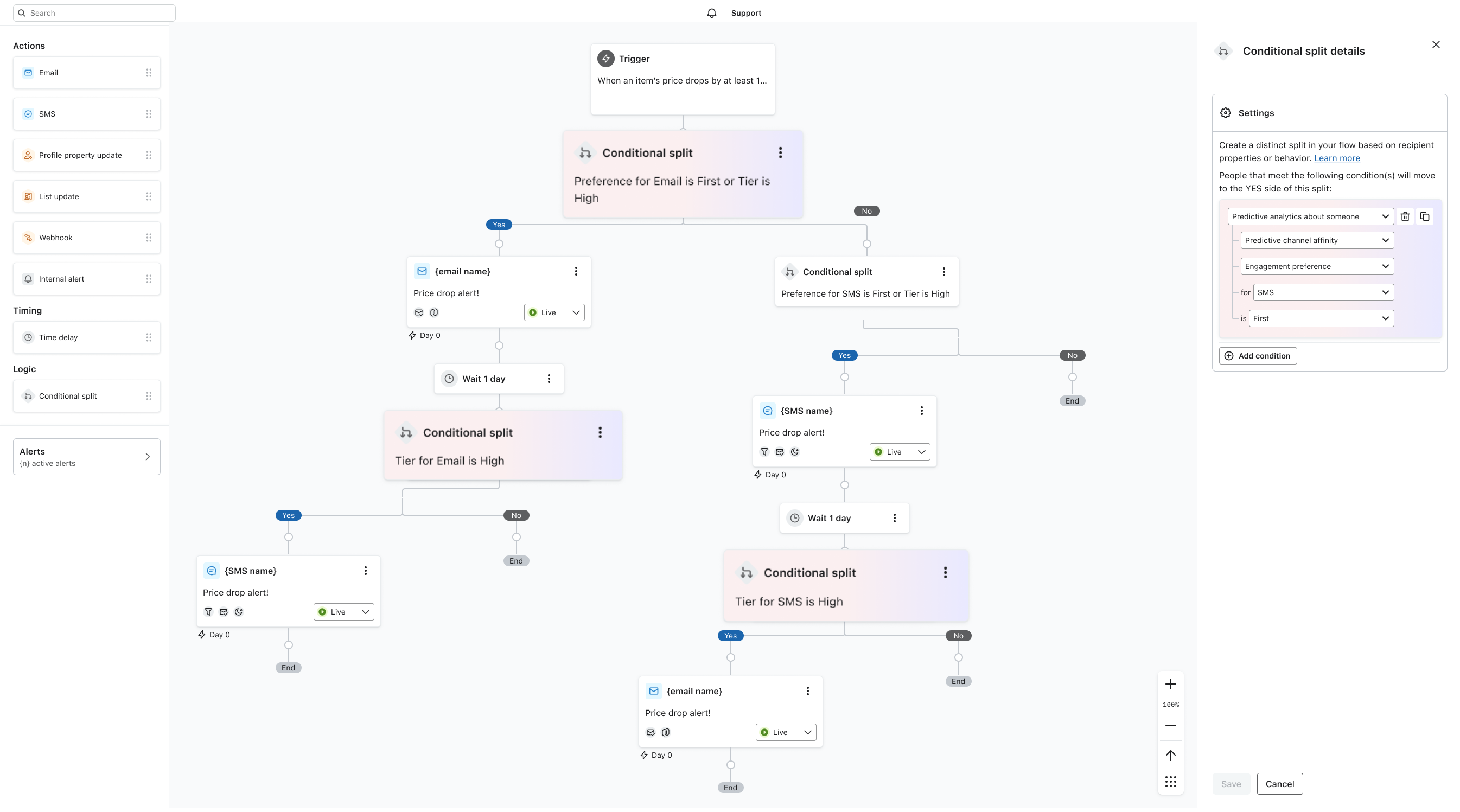
Channel Affinity was built to automate channel selection for marketers — predicting which channel (Email, SMS, Push, WhatsApp) a given profile is most likely to engage with, based on an ML model trained on each company's historical data.
Background
Multichannel marketing was expensive, manual, and blunt. Brands were spending on channels that didn't convert for a given customer, with no ML-driven signal to guide routing.
Marketers want to: Send fewer, more effective messages through the right channel
Channel Affinity was the answer to "how do we automatically know which channel to send each person on, based on their actual behavior?"
Design Thinking
Channel Affinity reframed channel selection from a manual choice to a predictive routing decision. The system surfaces ranked engagement predictions so marketers can act without needing to understand the model internals.
Such that:
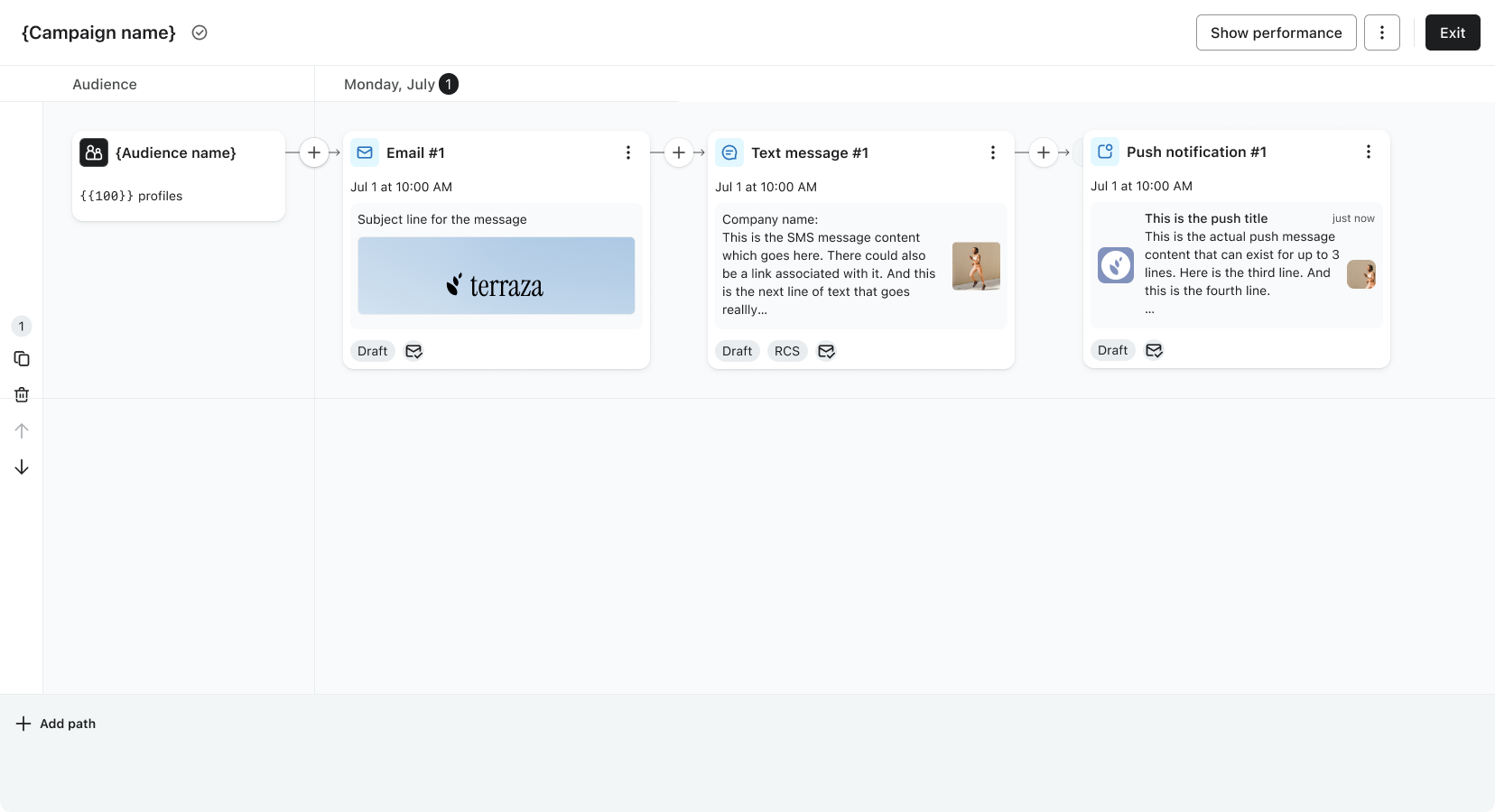
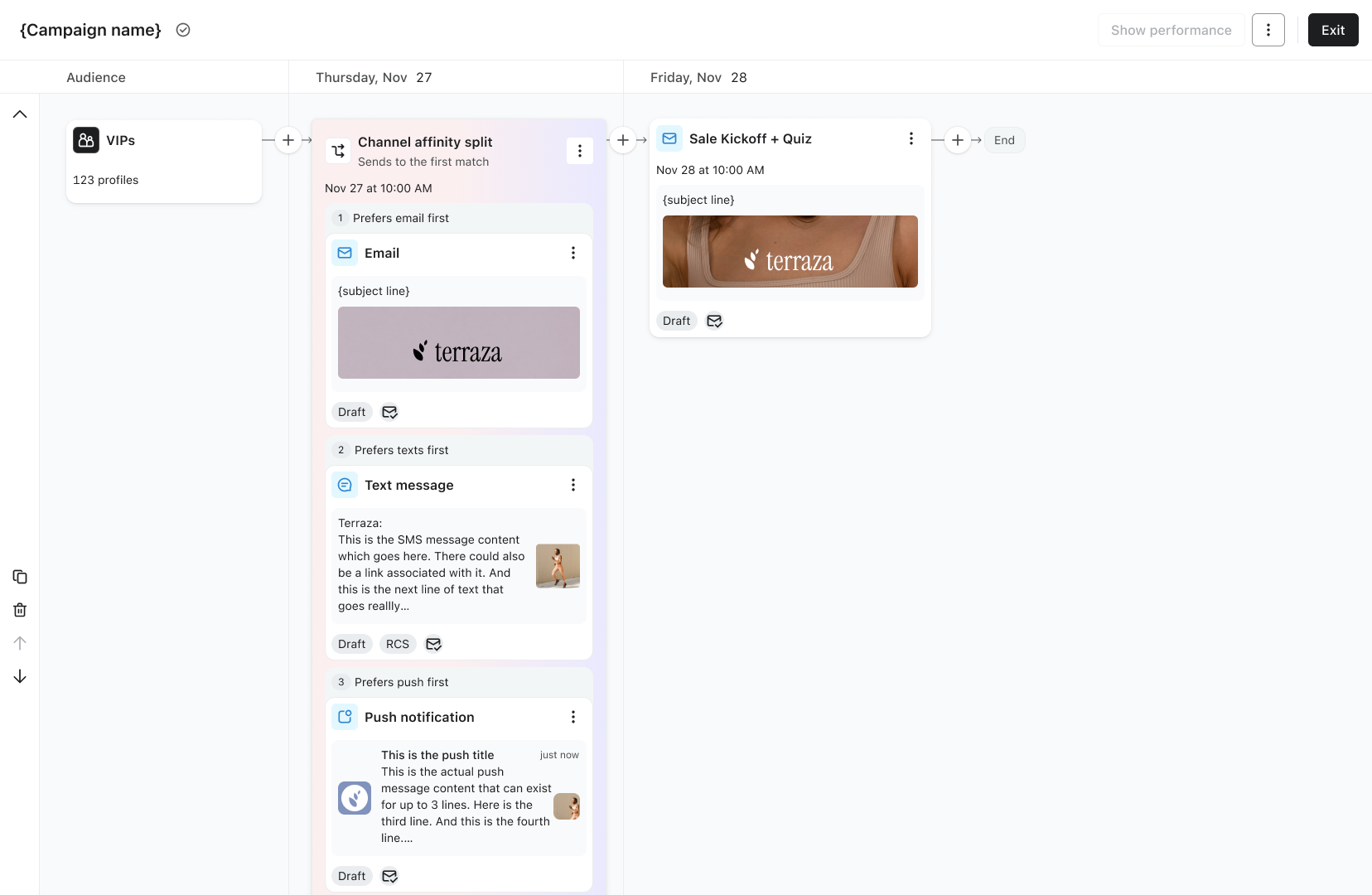
- A customer with high SMS engagement receives the offer first via text. If they don’t respond—and email is second—they get a follow-up email.
- Another customer with strong push engagement gets notified through a mobile alert.
- A VIP active across channels receives coordinated messages across SMS, email, and push—without overlap or fatigue.
User Testing
We conducted 1:1 interviews with 11 customers (SMB → Mid-Market) to learn whether they understood Channel Affinity’s mental model—and how it fits into their everyday Klaviyo workflow across segments, flows, and campaigns.
Key Findings
- Low conceptual understanding: Customers didn’t grasp that Channel Affinity was a prediction of engagement, not a stored preference.
- Terminology confusion: “Preference” and “predicted channel” were misinterpreted as manual fields, not model outputs.
- Lack of trust in the model: Users wanted more transparency into how rankings were decided.
- Unclear ranking system: Labels like “top engaged” or “rank 1” felt ambiguous.
Design tradeoffs
- Simplicity vs. control: Beginners wanted automation (“just pick the right channel”), while advanced users wanted more control (rank + engagement logic).
- Where to introduce it: Launched in Segment Builder first, aligning with existing mental models (flows added later).
- Naming direction: Shifted from “preference” → “engagement” to better reflect predictive behavior.
Solution
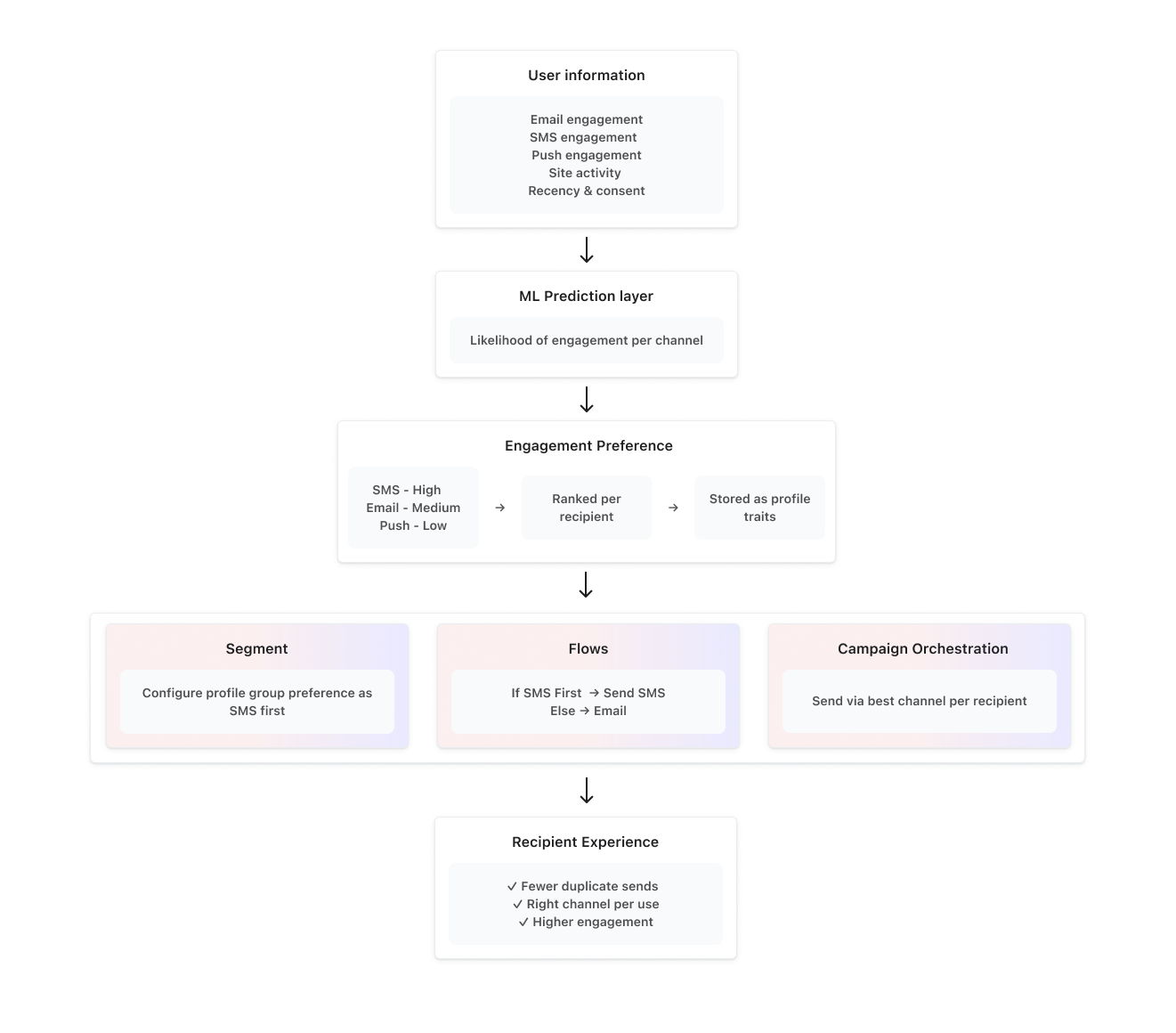
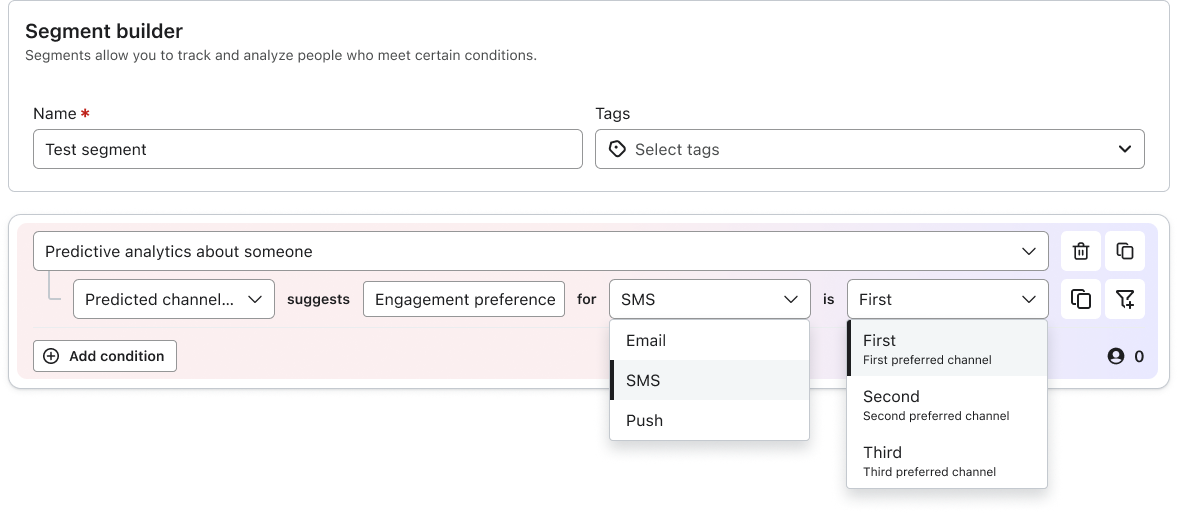
Instead of manually guessing which channel to use, Channel Affinity uses each customer’s profile to enable smarter segmentation and dynamic orchestration from ranked engagement predictions—without forcing marketers to manually manage channel routing for every customer. The output is an Engagement Preference profile property (First / Second / Third), which marketers use in:
Understanding profile engagement data.
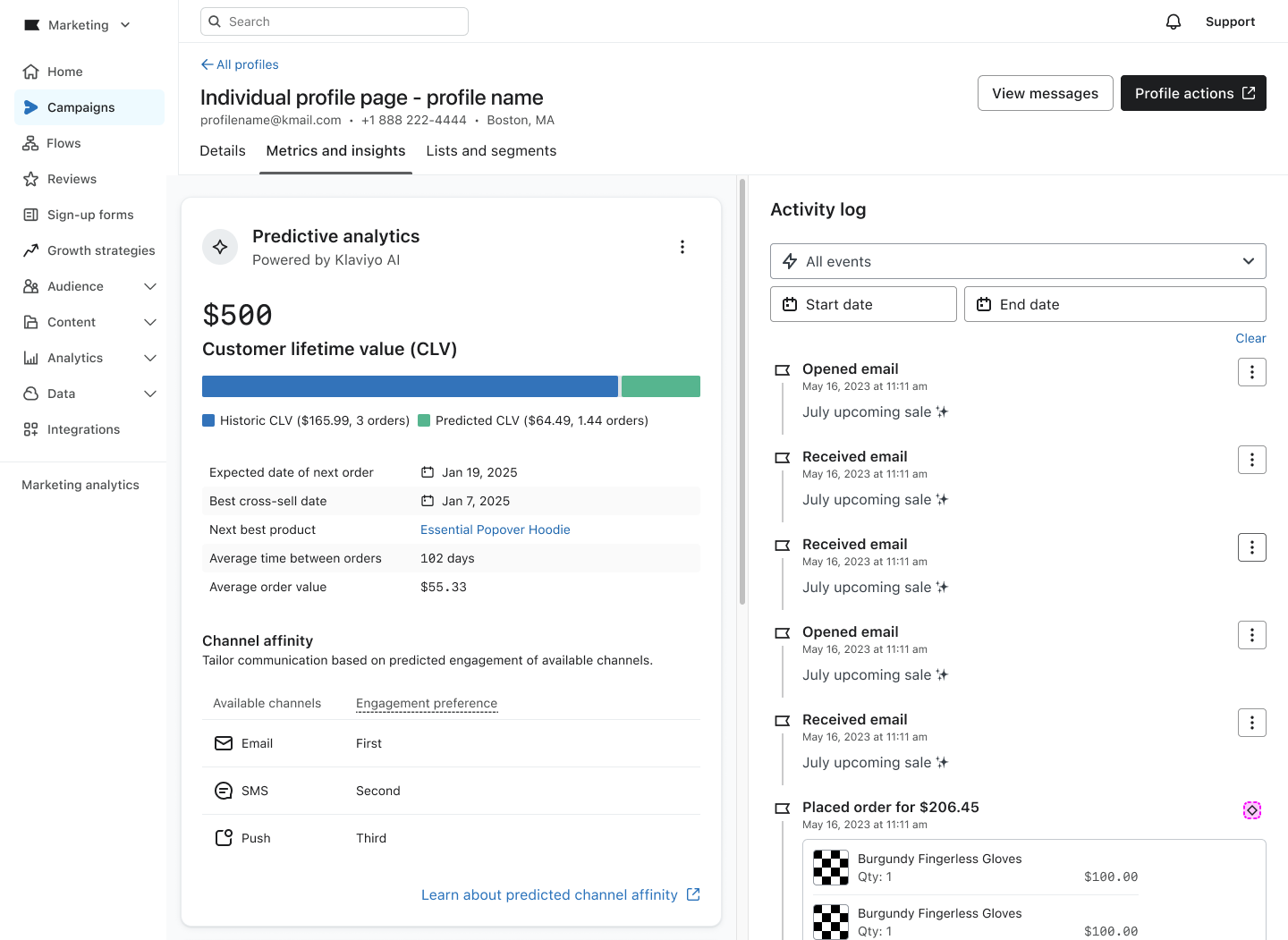
Segmenting specific audiences based on engagement such as SMS first.
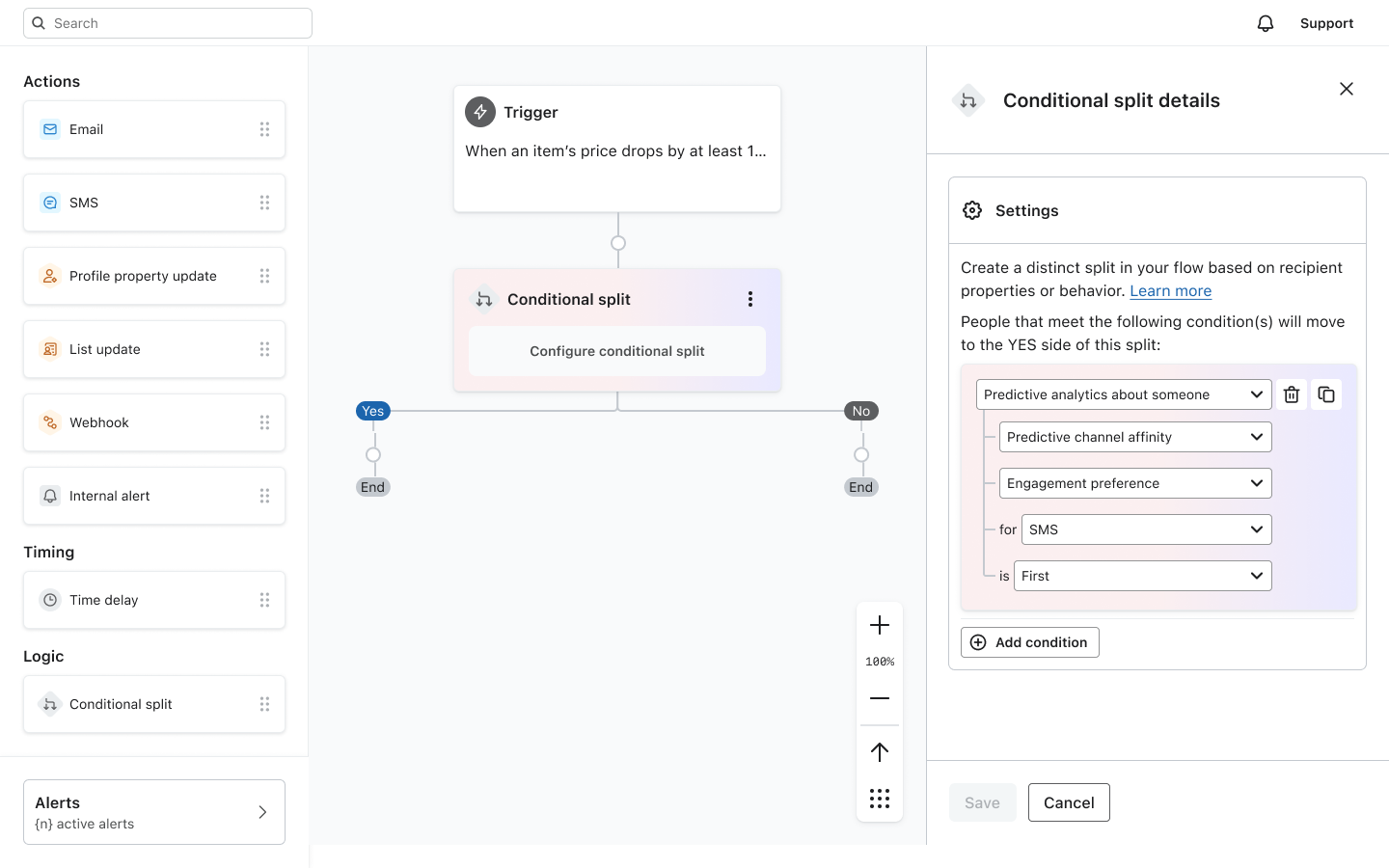
Routing flows messages to the next-best channel when the first doesn’t convert
What it enabled
- Smarter segmentation: build high-performing audiences using ranked channel preferences
- Higher conversions: lead with channels where each customer is most likely to act
- Dynamic automation: use flow filters and conditional splits to route messages to the right place at the right time
- Reduced fatigue: avoid spamming customers with the same message across every channel
- True omnichannel orchestration: journeys adapt based on channel engagement—not rigid rules
Impact
Feature impact
My key design contribution:
- Tied the knots between Channel affinity in segments and flows with profiles reporting
- Updated product strategy + PRD, shaping future direction
- Identified gaps in adoption, clarity, and ROI communication, informing next-gen optimization work