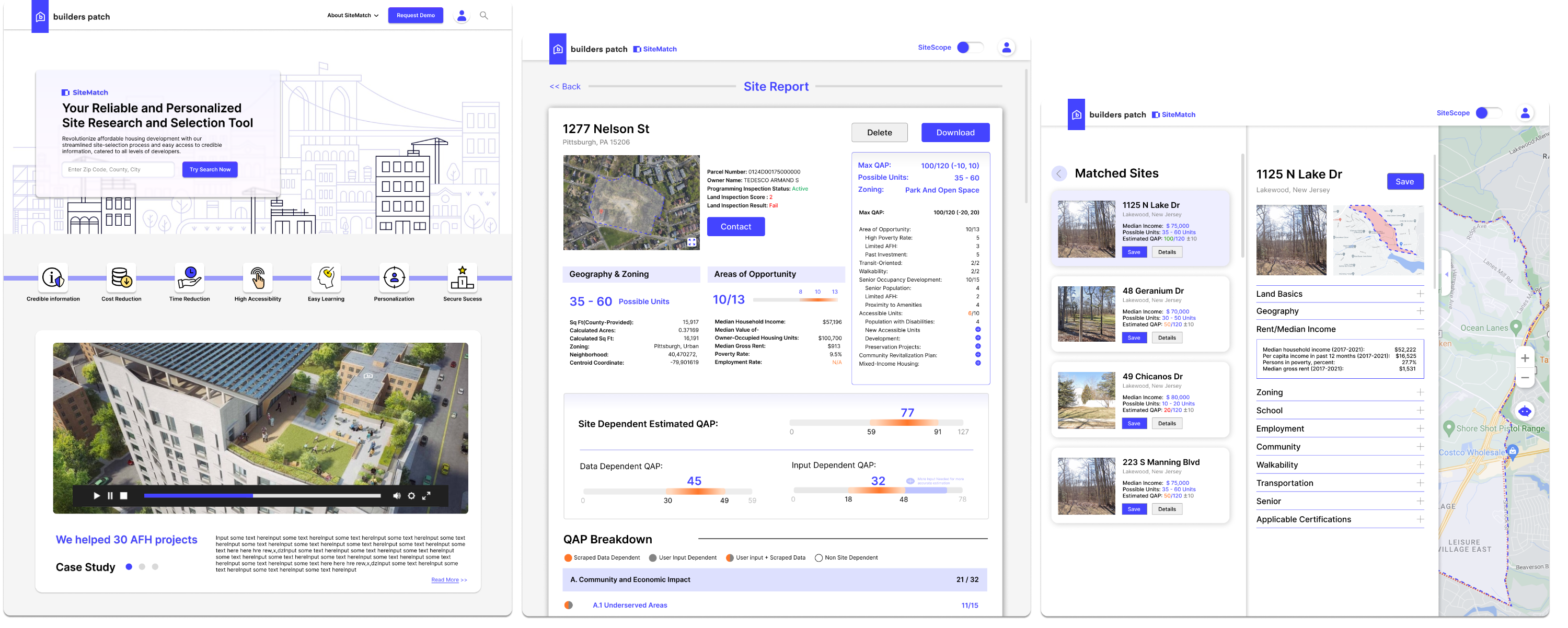
Assists developers in identifying, evaluating, comparing, and selecting potential sites that align with their priorities and have the greatest potential for securing government funding.
The affordable housing development process is riddled with complexities and developers might not be equipped to navigate it with accuracy and speed.
How might we help developers identify potential sites to maximize their chances of accumulating more points in the QAP Selection Criteria to obtain LIHTC?
We conducted 10 expert interviews with developers, architects and consultants who work within affordable housing in the east coast to identify 3 common pain points:
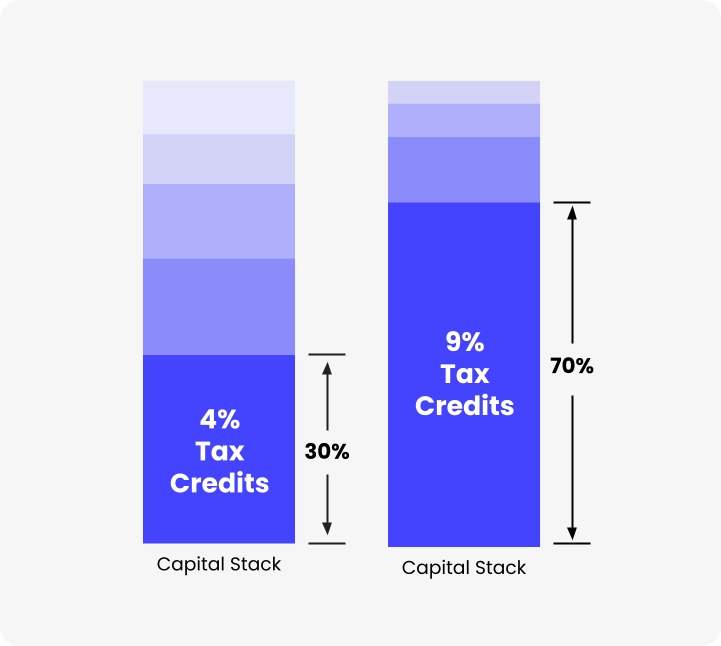
Funding is scarce while construction costs are rising when profits are minimal due to rent limitations.
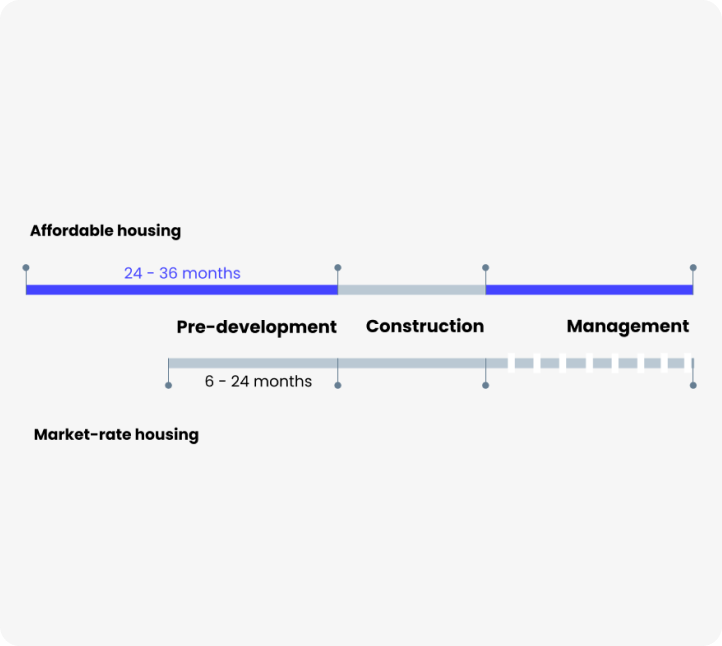
Affordable housing is in high demand yet the development process is lengthy and more cumbersome compared to market rate projects.
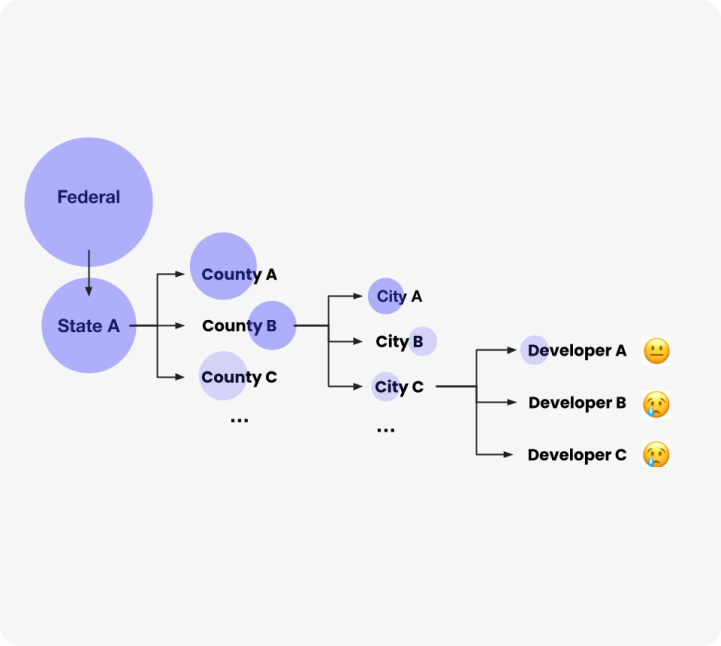
Affordable housing relies on region-specific government policies, with complex regulations and requirements.
QAP, otherwise known as Qualified Allocation Plan, is a document detailing priorities and selection criteria to obtain funding. Therefore, the higher a developer's QAP Score is, the higher the probability to get funding.
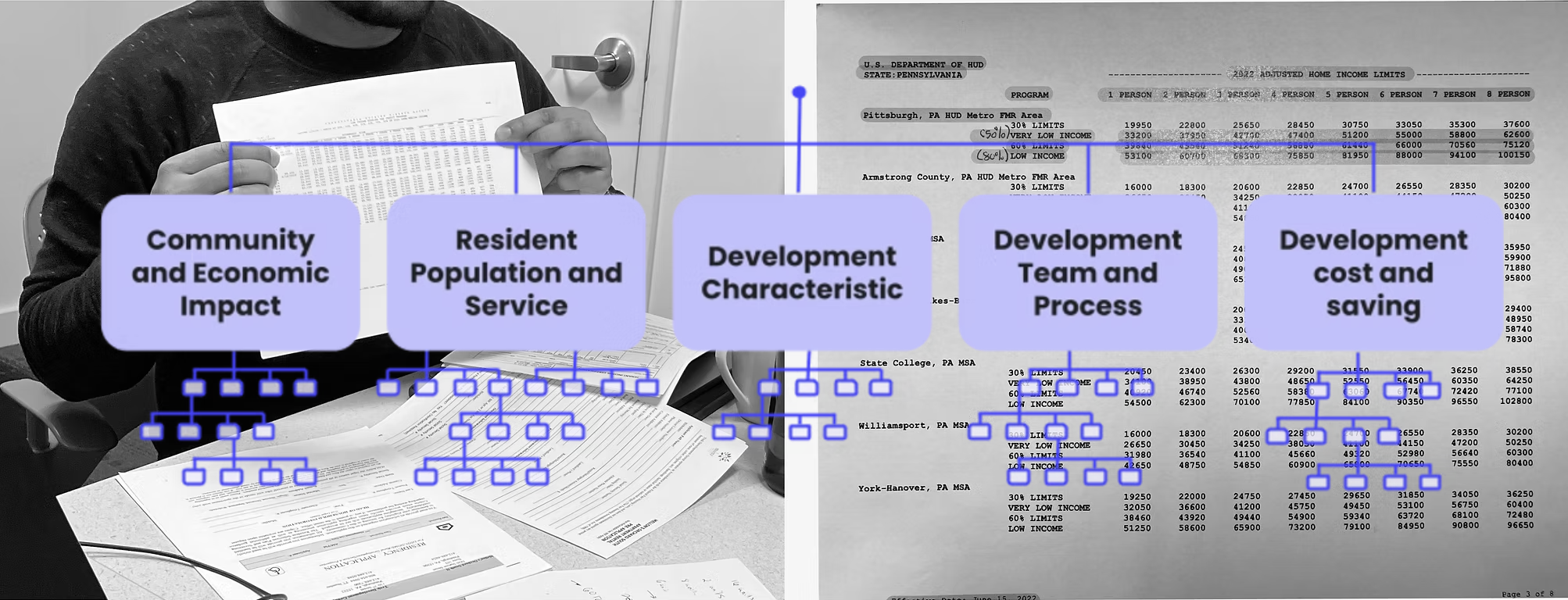
QAP can be broken down into 5 main selection criteria including Community and Economic Impact, Resident Population & Services, Development Characteristics, Development Team and Processes, and Financial Feasibility.
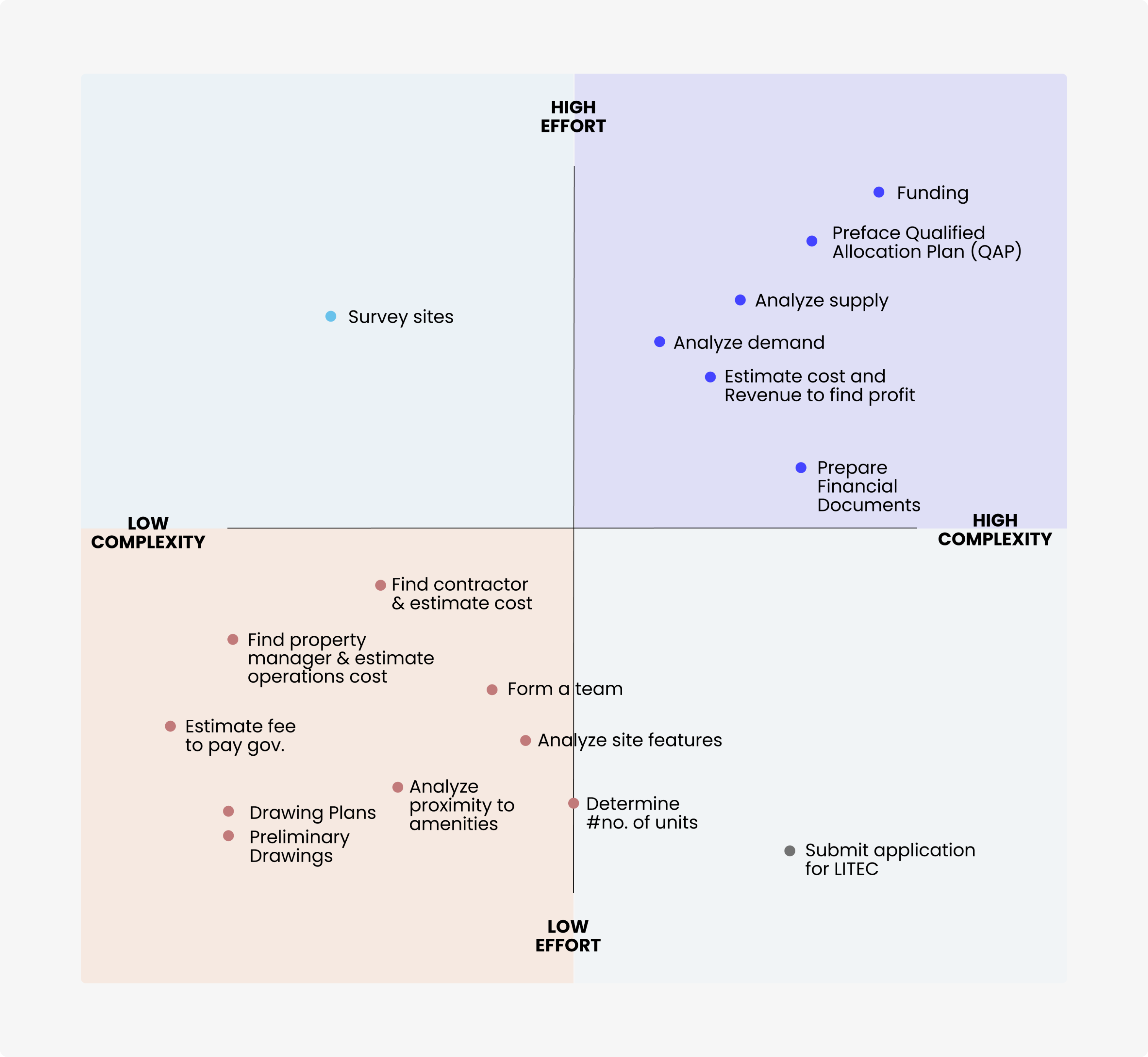
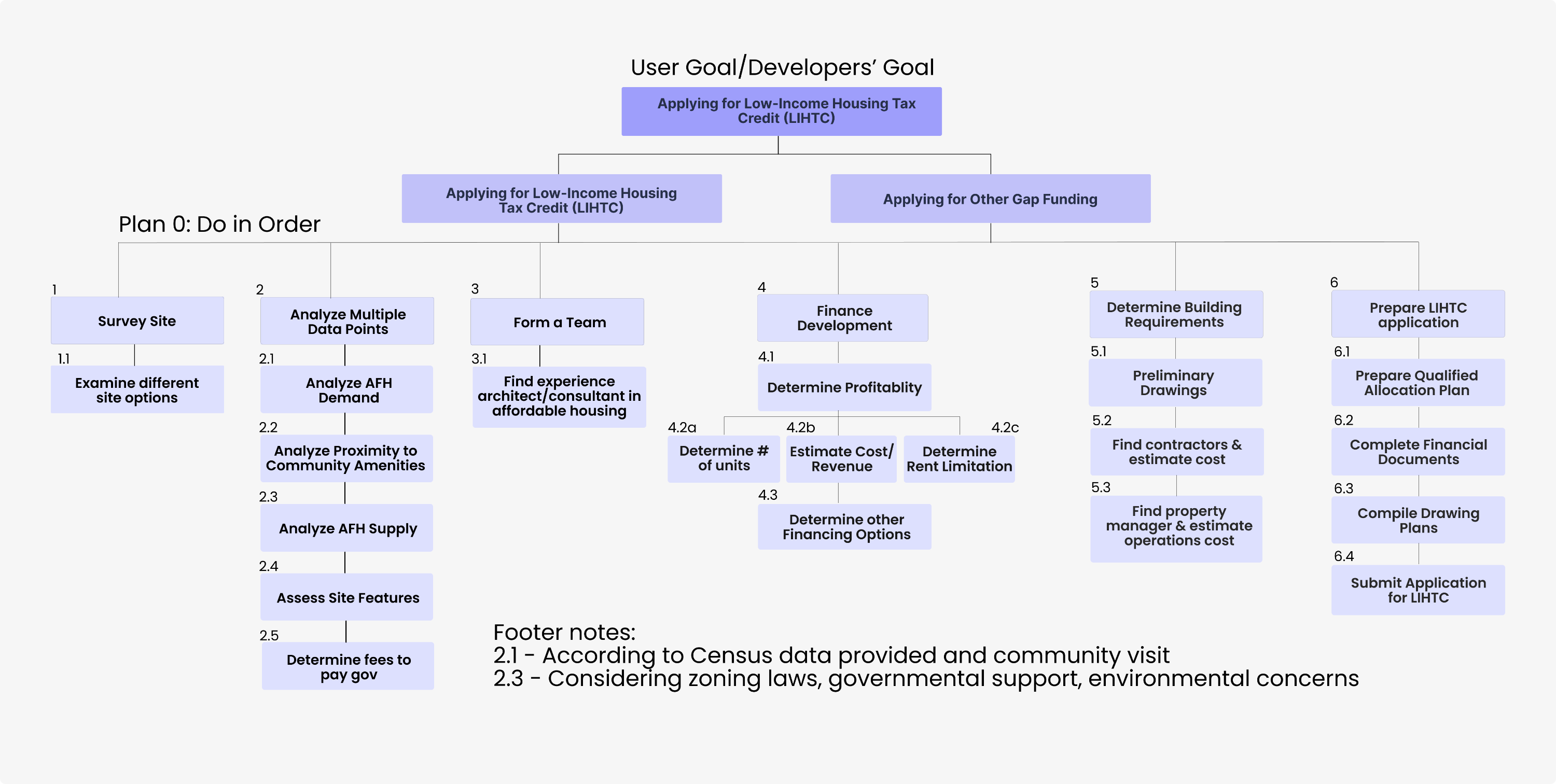
Affordable housing is so government regulated that where our team can intervene was difficult. To overcome this, we mapped each step on an effort against complexity matrix to find where developers struggle to understand where value can be added.
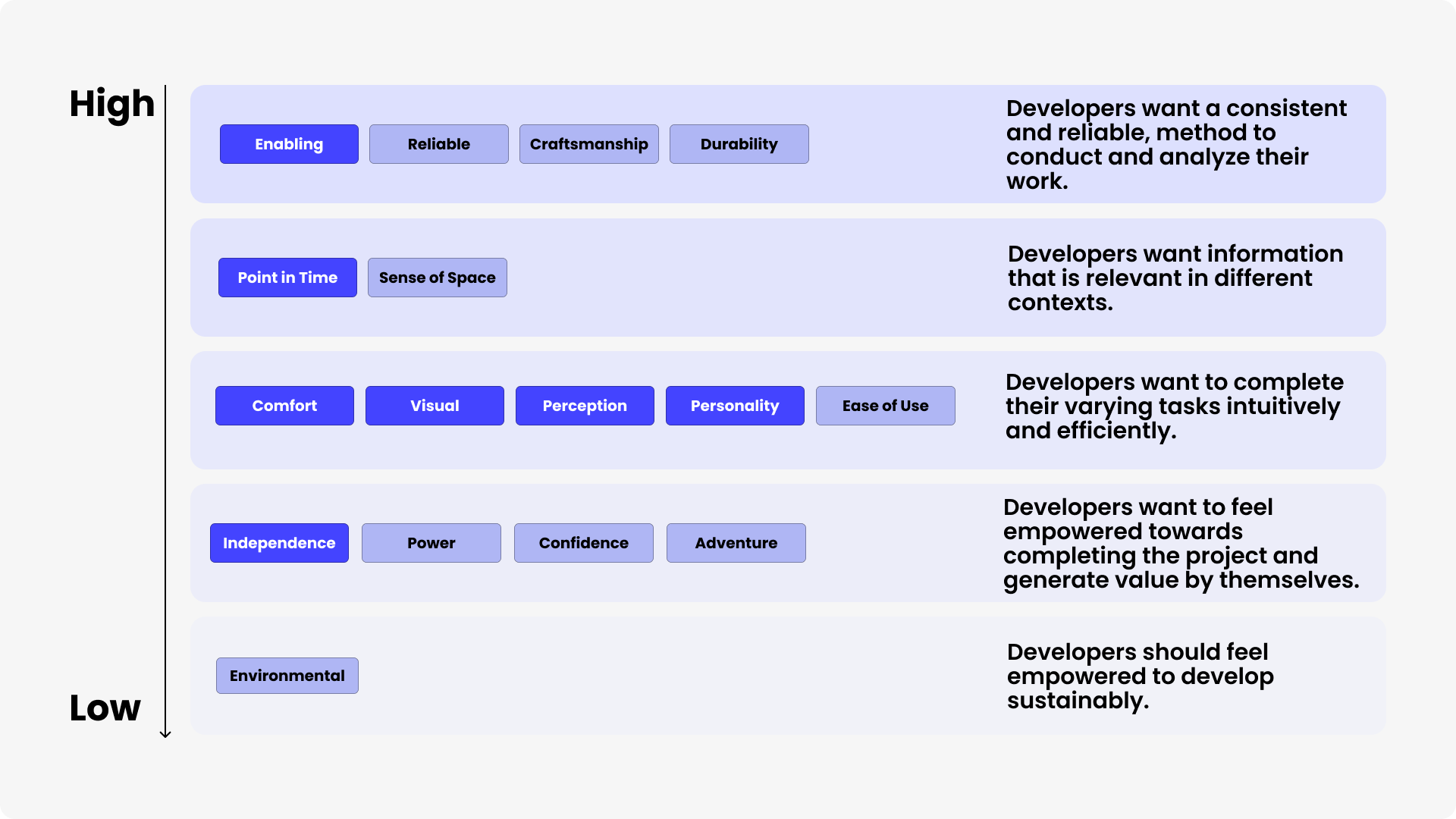
To further understand developer's pain points, the team identified seven key values developers seek: enabling, point-in-time, comfort, visual, perception, personality, and independence.
Developers struggle with a surplus of information that is often out of date. They don't have control in project completion as information is scattered and messy.
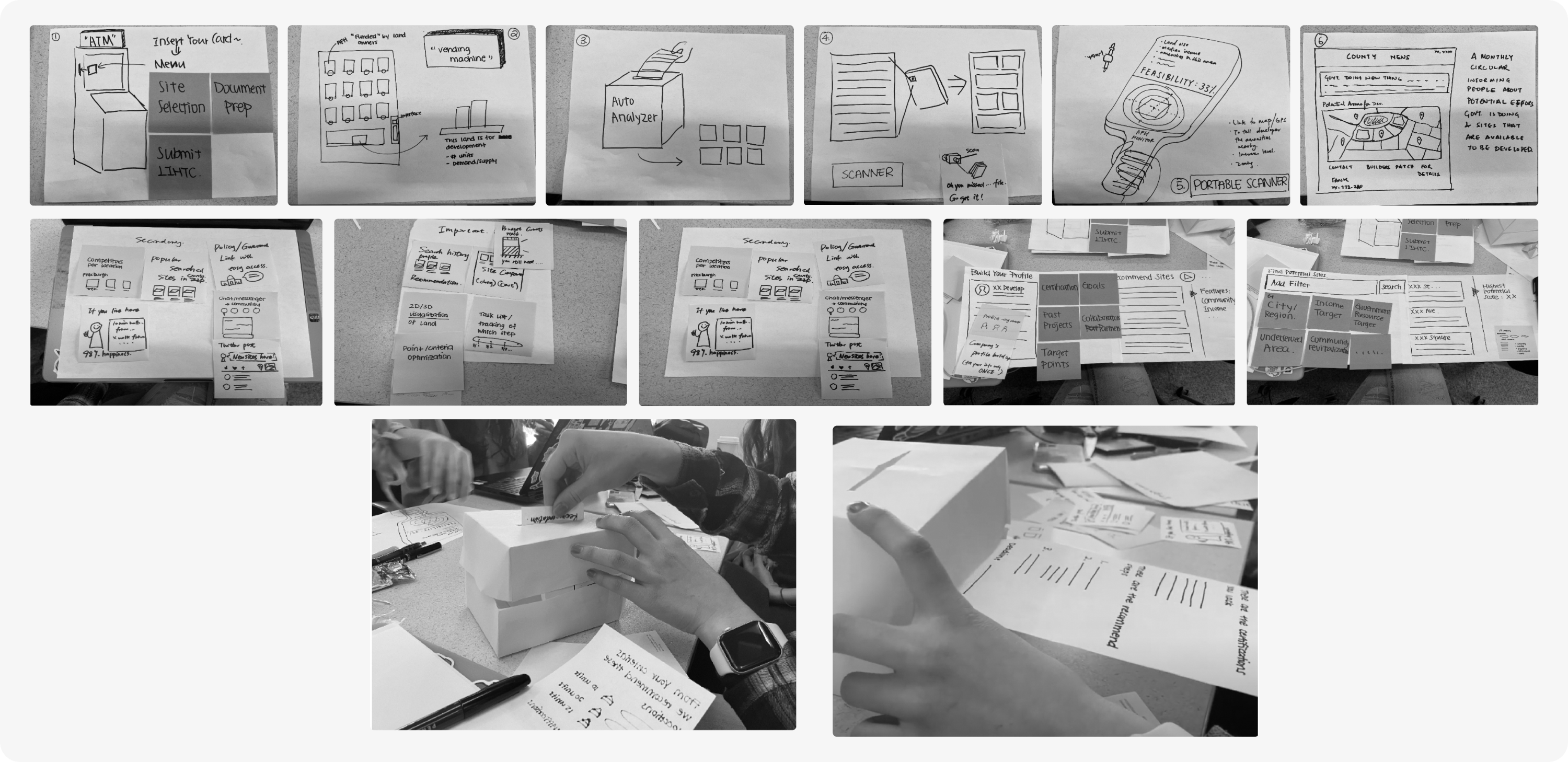
The team conducted a Build-a-thon, utilizing the Crazy 8 brainstorming and physical wire-framing to generate innovative concepts. This process fostered team confidence and a collective vision for potential solutions.
The team designed 3 concepts to bridge the gap between experienced and inexperienced developers, provide reliable and up-to-date information, allow for easy site discovery and evaluation at a low cost, and be customizable to developers' priorities and preferences.
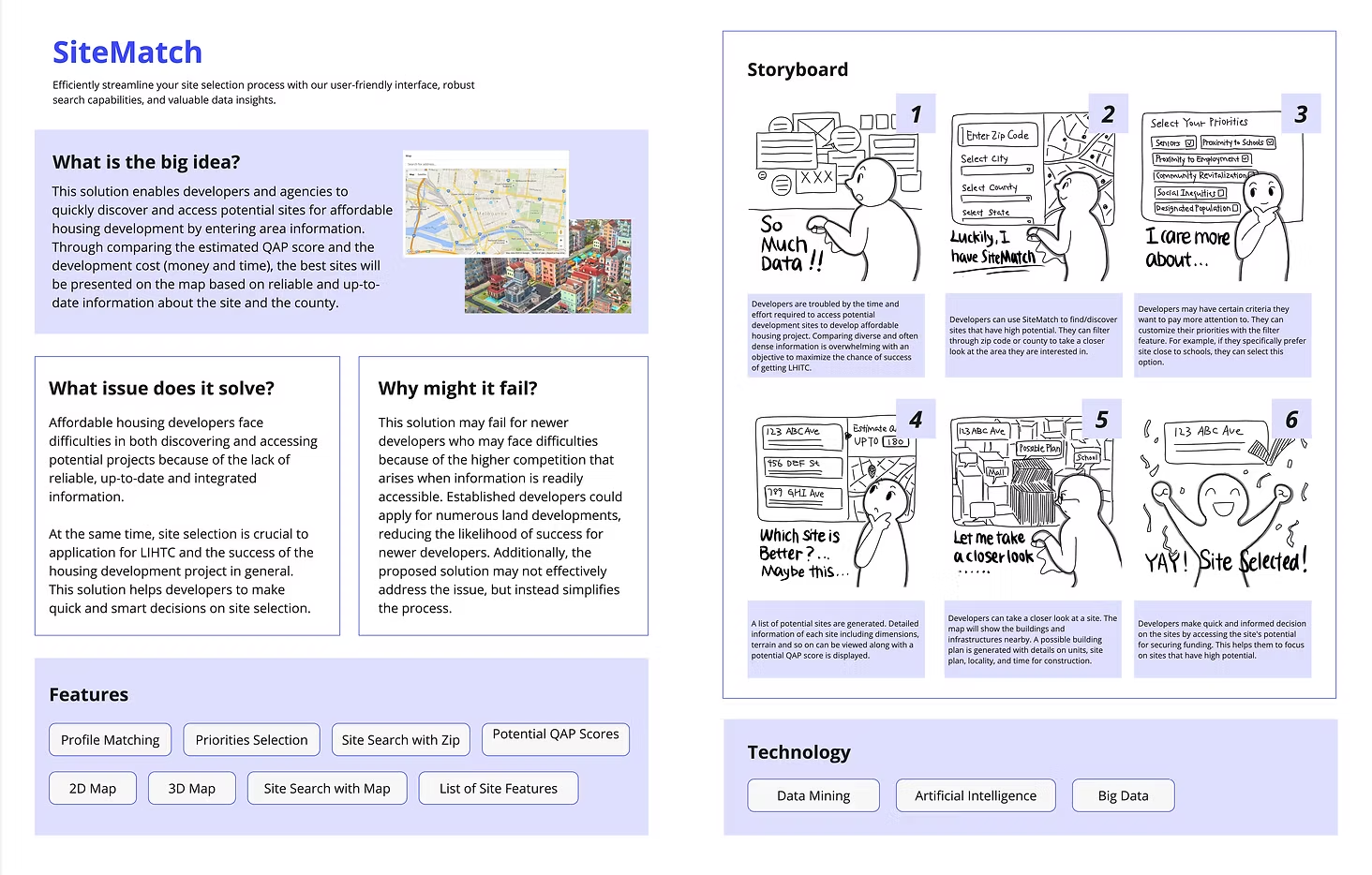
A platform that streamlines site selection by presenting the best potential sites based on estimated QAP score.
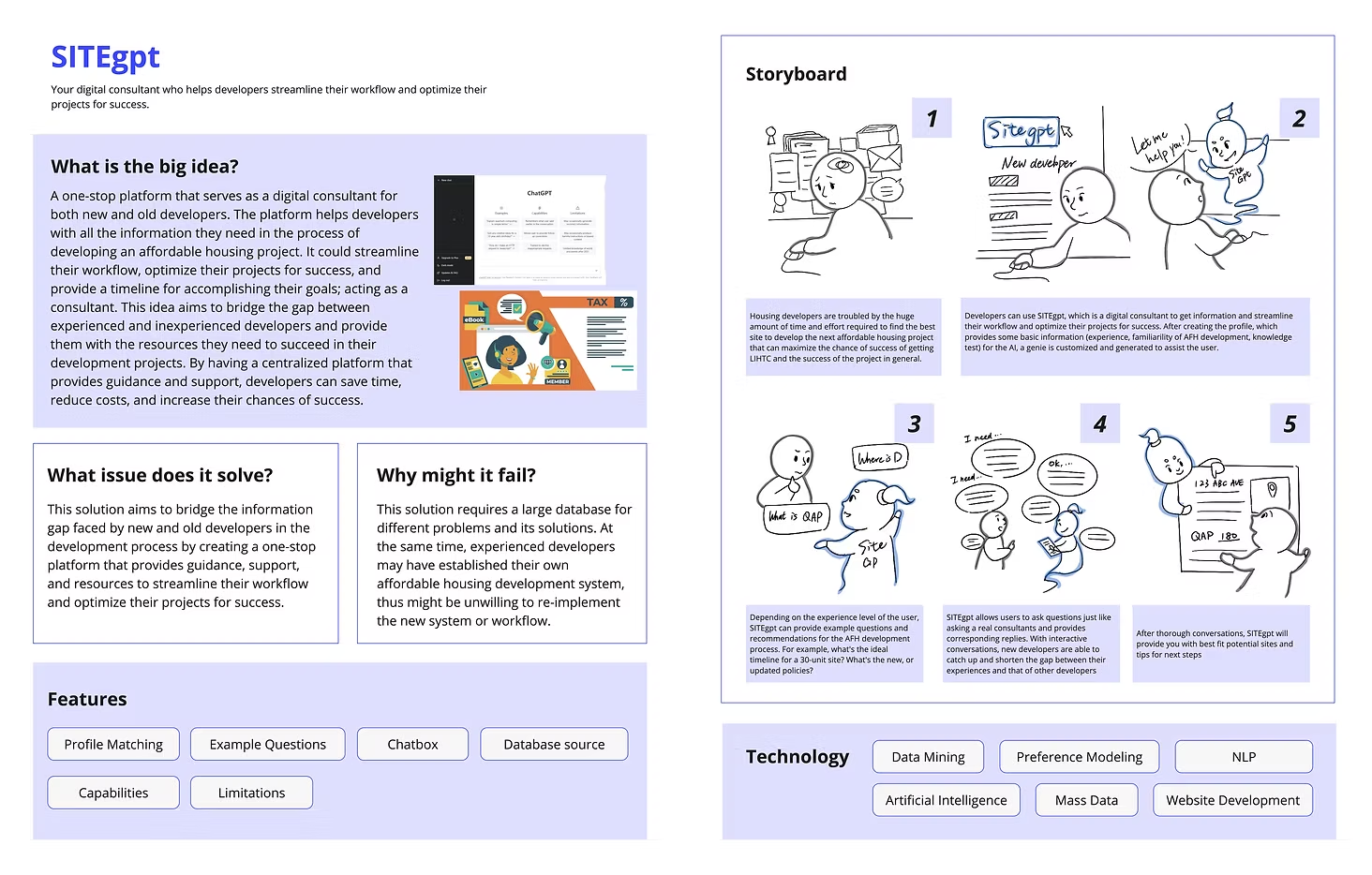
Conversational platform that provides guidance, resources, and support to streamline workflow, optimize projects, and bridge gaps in knowledge.
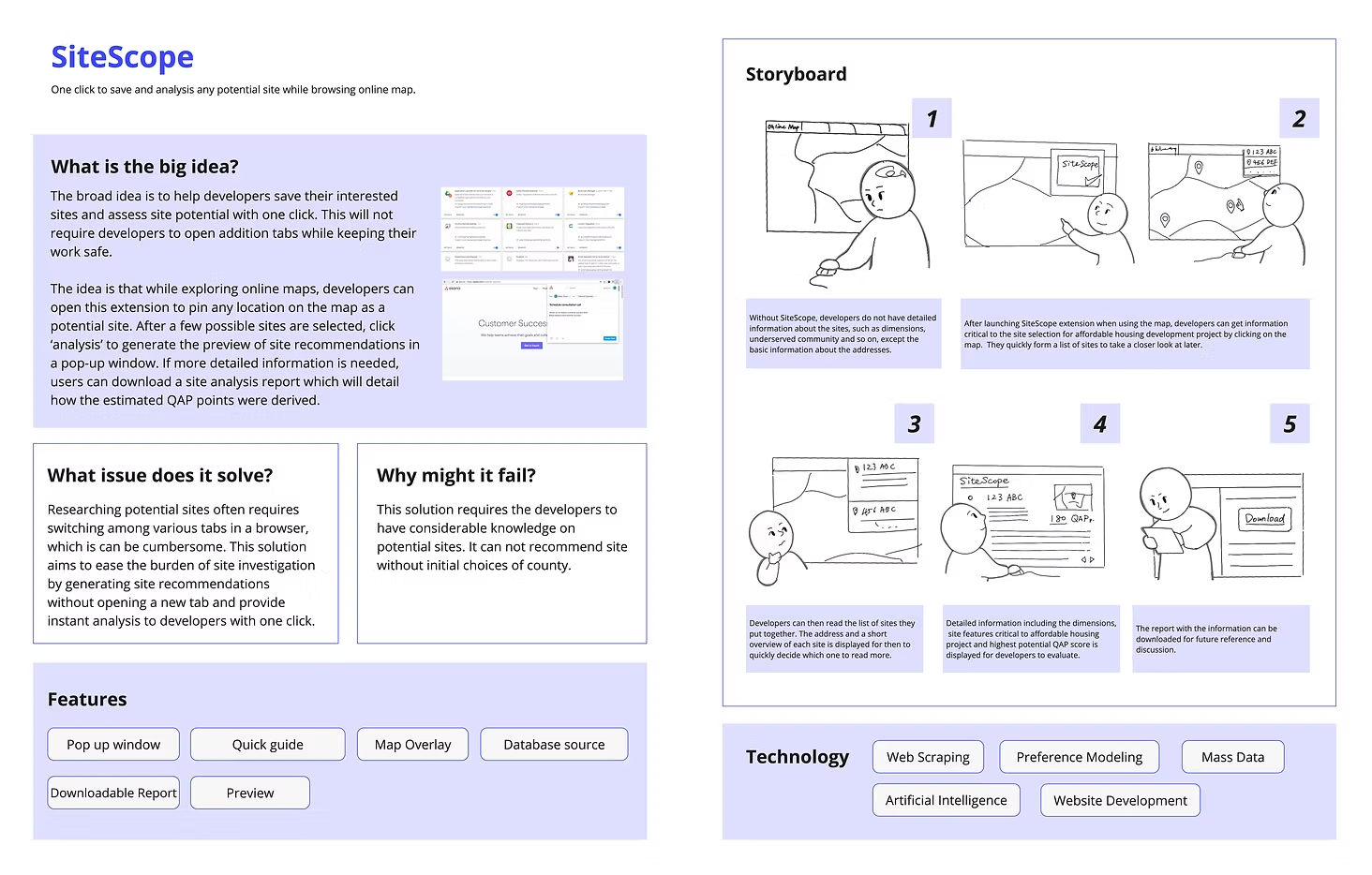
An extension that allows developers to save potential sites, maps, research. The extension analyzes the data presented to present site options.
The team selected SiteMatch as the winning concept—a platform that streamlines site selection by presenting the best potential sites based on estimated QAP score, addressing the core need for reliable, integrated, and up-to-date information.
Our team facilitated a co-design initiative, bringing together developers, architects, and multi-housing experts in a series of workshops to foster open dialogue, idea exchange, and rapid prototyping.


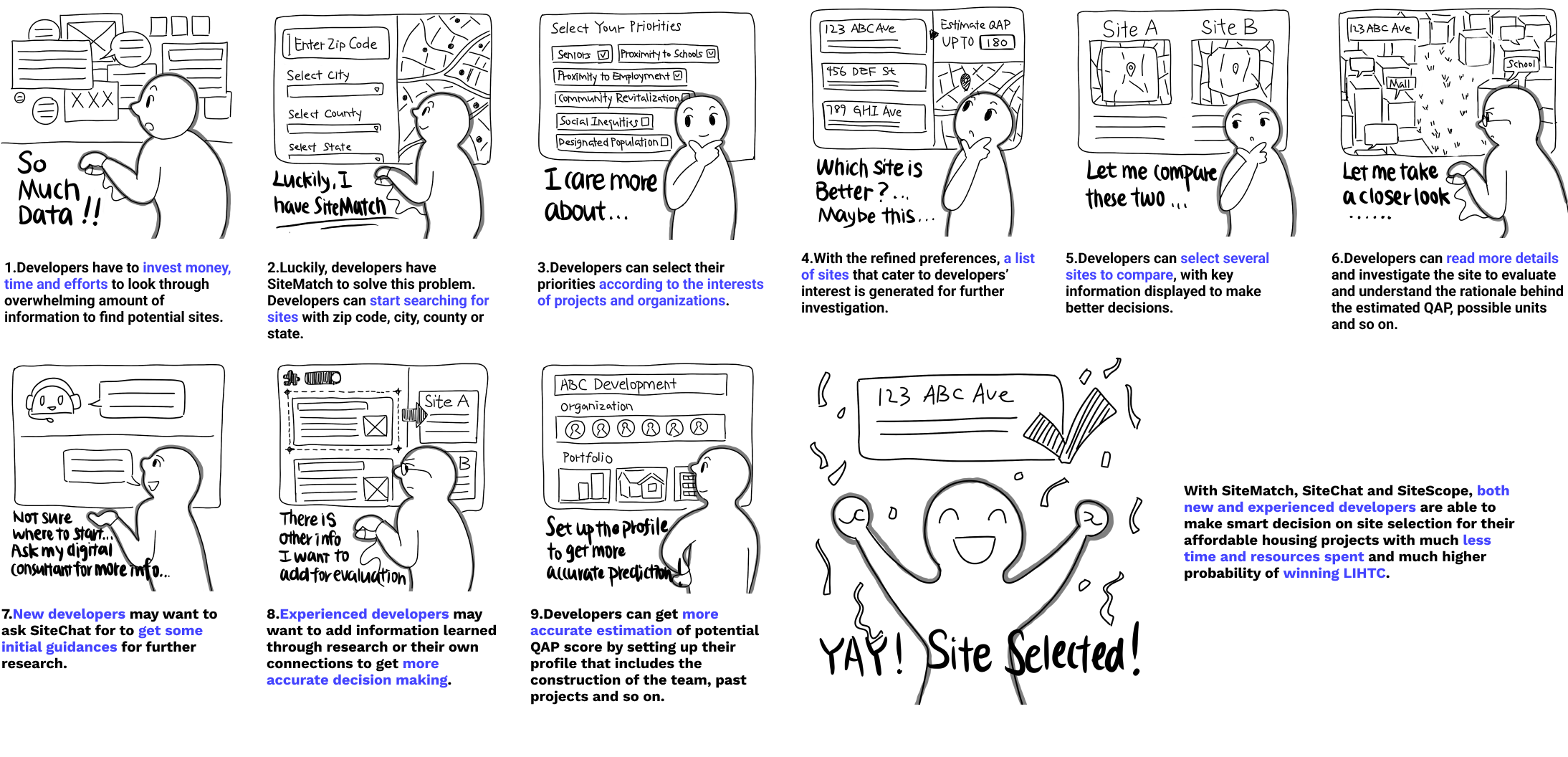
Introducing SiteMatch—a one-stop platform to find reliable, integrated, and up-to-date information of sites according to preferences and market demand.
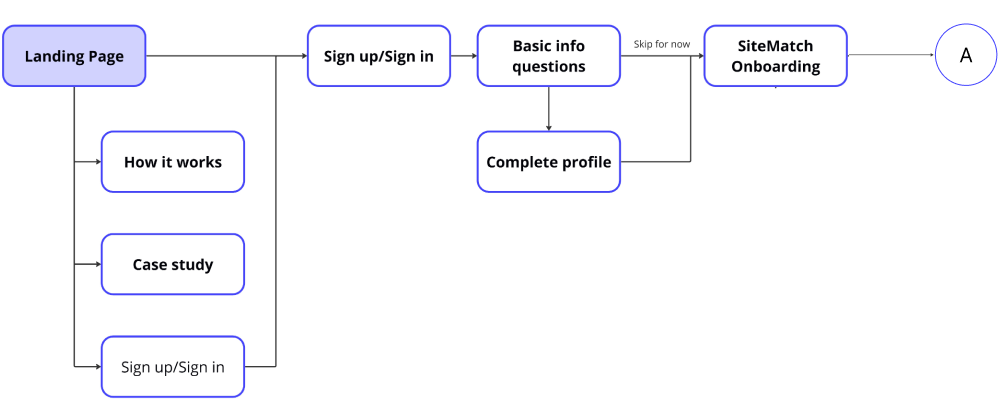
The proposed user flow for SiteMatch is designed to provide an intuitive and streamlined experience for developers looking for potential development sites. Upon visiting the SiteMatch landing page, users are presented with three main features: "How it works," a case study showcasing the platform's successes, and a sign-up/sign-in section.
Initial search functionality allows developers to filter potential sites based on location, preferences, and market demand to find optimal development opportunities.
Integrated QAP calculator estimates potential scores for each site, helping developers identify sites with the highest probability of securing funding.
Streamlined workflow enables developers to compare and select sites that optimize QAP score to obtain funding, with access to all potential sites in specified locations.
System architecture includes data scraping, data parsing, database integration, and result presentation to ensure reliable and up-to-date information delivery.
It's important to expand user testing to users of different demographics as experience and habits lead to different perspectives. Although site development can be simplified for new users, old developers prefer their routine methods.
For complex B2B services, it's important to show to users as soon as possible the deliverable as data gets messy and there is a difference in knowledge level. Pivot, prototype, co-design, and workshop continuously.