Case study · Klaviyo
Audience Optimization
An intelligent decision engine that determines who should receive which messages — removing people likely to unsubscribe, adding people likely to convert. I led the UX from beta to GA.
Background
Sending to the wrong people, at scale.
When multiple campaigns run simultaneously, marketers have no way to ensure the most valuable message reaches the right person. They rely on send time as a crude priority signal — manual, unscalable, and blind to engagement risk. The result: higher unsubscribes, damaged sender reputation, and lost revenue.
No competitor offers content-aware, real-time volume control that dynamically adjusts who gets what — based on message value, channel cost, and recipient behavior. That's the gap AO fills.
Setup experience
One toggle. Maximum impact.
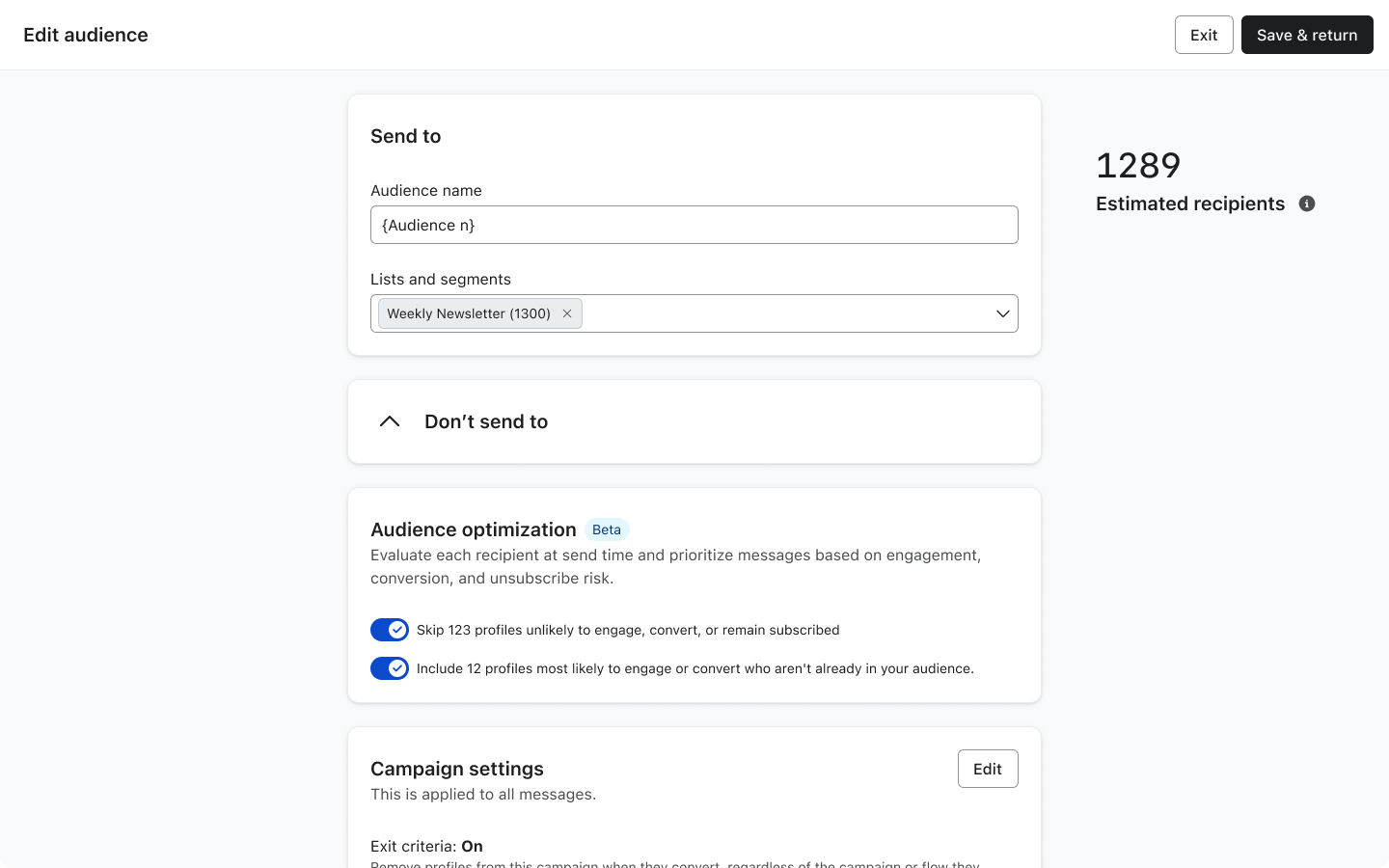
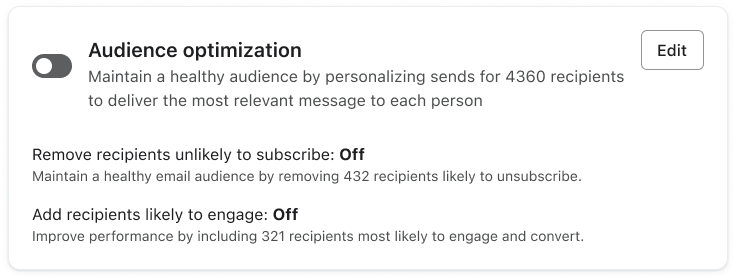
AO lives in the audience selection step — a single toggle that removes recipients at high unsubscribe risk before the campaign sends. Simple to enable, easy to understand.
Setup — audience selection with AO toggle
Design thinking
What changed → Who was removed → How it changed.
The model doesn't understand campaign intent — so I couldn't make it invisible. I structured the UX as a story: where is AO active, who did it affect, and did it work? Three design questions, three sections of the experience.
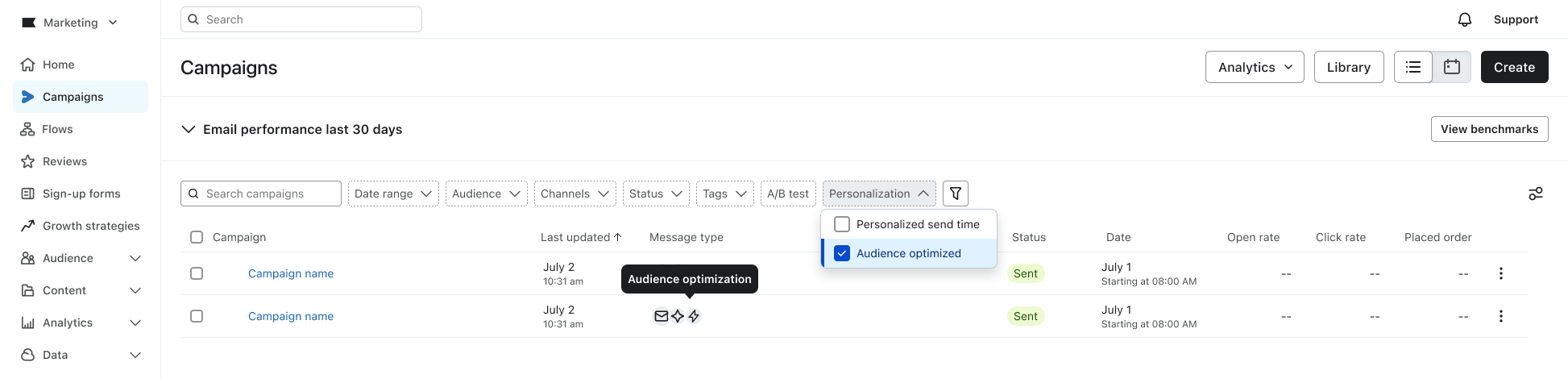
Showing where AO is active
AO is configured at the audience level but surfaces across campaign setup, the message list, and analytics. I introduced an AI badge with Design Systems to make it visible end-to-end.
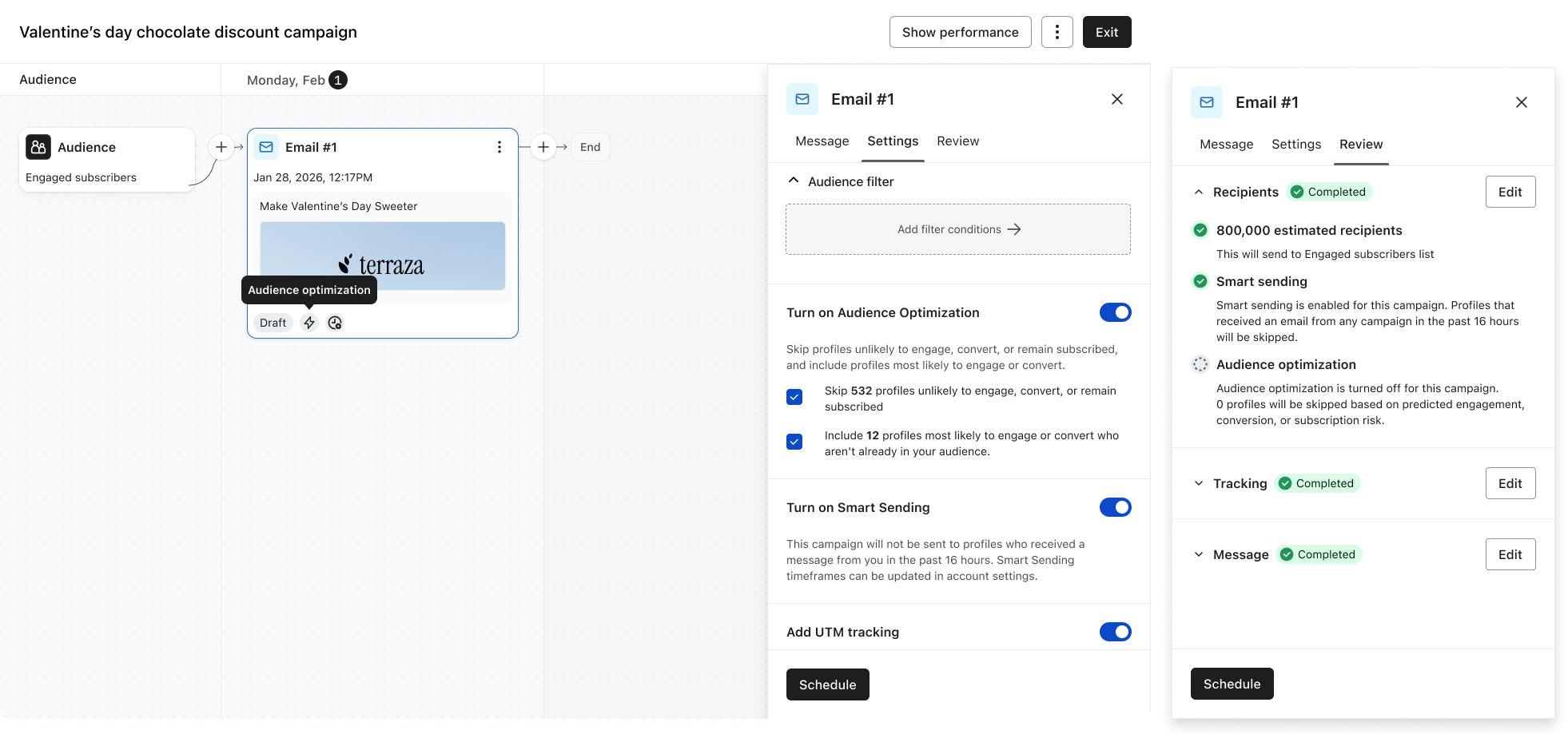
Showing who was removed
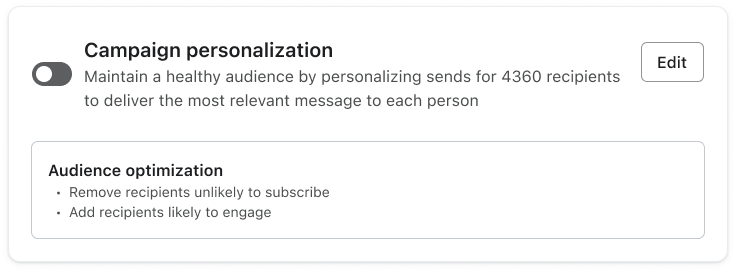
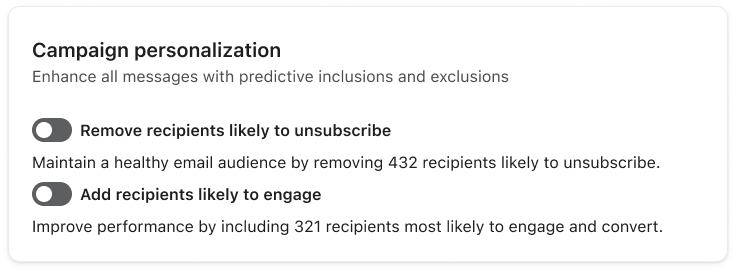
I explored three design directions for the campaign analytics view — from minimal summaries to full transparency panels. Option 3 won: per-feature toggles that give customers intentional control without overwhelming them.
Analytics
Did it work? Make it obvious.
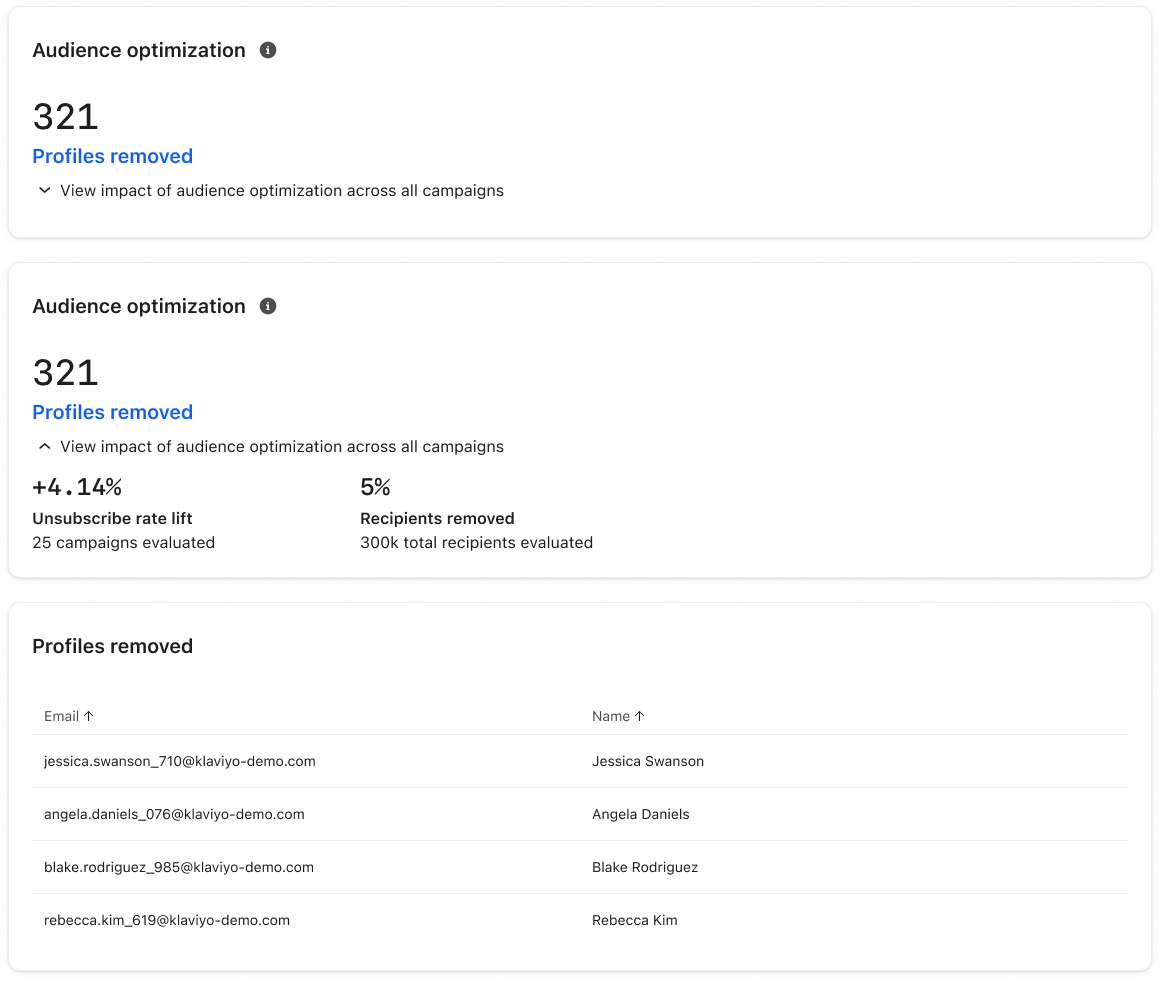
I partnered with Data Science to connect model decisions to clear, measurable outcomes — profiles removed, unsubscribe rate improvement, and aggregate lift across campaigns — surfaced directly in the campaign overview.
Campaign analytics — profiles removed and unsubscribe lift
Roadmap
From protection to full orchestration.
AO ships in phases — each expanding what the model can do and how much control marketers have.
Impact